
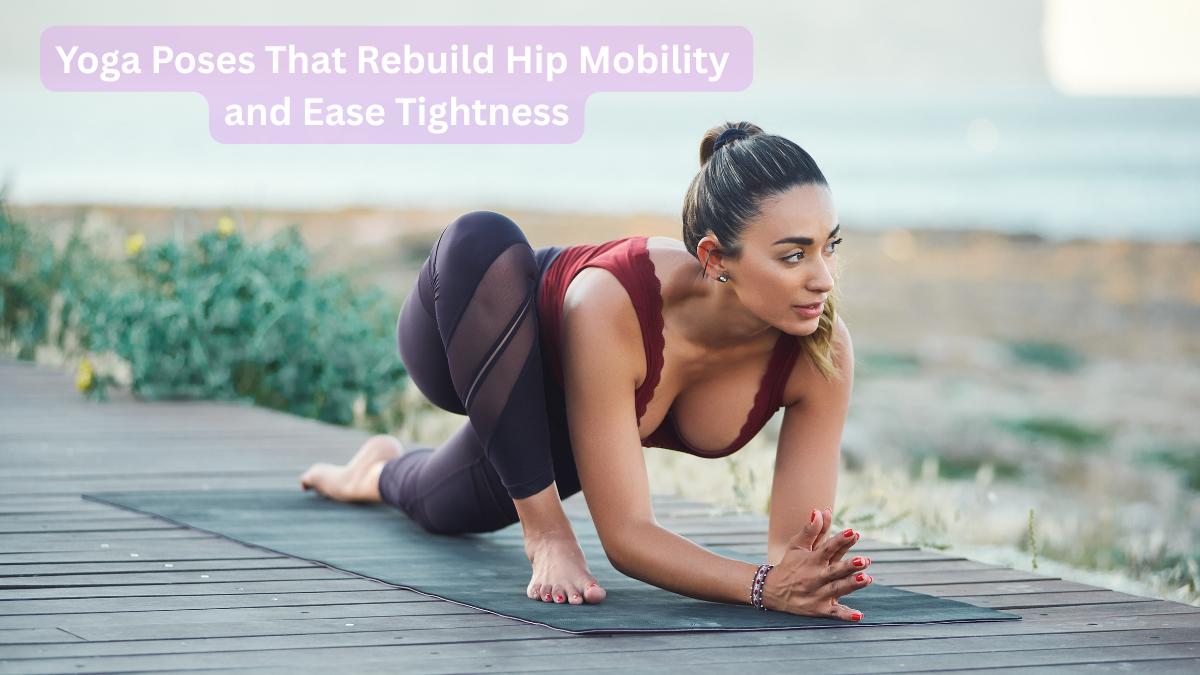
Hip tightness doesn’t happen overnight—and it rarely disappears with one intense stretch. True hip mobility is rebuilt through gentle, repeated movement that the body trusts. Yoga is especially effective because it combines slow motion, supportive positions, and calm breathing, allowing the hips to regain range of motion without triggering resistance or pain.
Why Hips Lose Mobility Over Time
Long hours of sitting, repetitive exercise, stress, and limited movement patterns cause the hips to stiffen. When hips stop moving well, the body compensates through the lower back or knees, often leading to discomfort. Yoga helps reverse this by restoring natural movement gradually and safely.
Reclined Knees-to-Chest Pose
This pose gently decompresses the hip joints and lower spine. It’s a great starting point because it reduces guarding and signals relaxation before deeper mobility work.
Supine Figure-Four Pose
A foundational hip-mobility pose, this stretch improves external rotation while keeping the spine supported. It releases deep outer-hip and glute tension without strain.
Cat–Cow Pose
Slow spinal flexion and extension reconnects the hips and lower back. This coordinated movement lubricates joints and improves overall mobility more effectively than static stretching.
Low Lunge (Upright and Controlled)
Tight hip flexors are a major cause of restricted movement. A gentle, upright low lunge restores hip extension—essential for walking, standing, and climbing stairs.
Reclined Butterfly Pose (Supported)
With the soles of the feet together and knees supported, gravity opens the inner hips passively. This pose rebuilds mobility while the body remains completely relaxed.
Wide-Knee Child’s Pose
A restorative posture that allows the hips to open naturally. It’s especially helpful when tightness is linked to stress or fatigue.
Happy Baby Pose (Gentle Hold)
This pose encourages natural hip flexion and rotation while grounding the spine. Keep the hold light and focus on breathing rather than depth.
Bridge Pose (Supported)
Strength is part of mobility. Bridge pose strengthens the glutes and stabilizing muscles that support healthy hip movement, making mobility more durable.
Seated Side-to-Side Hip Shifts
Gently shifting weight side to side improves lateral hip movement—often neglected but essential for balance and daily function.
How Long and How Often to Practice
Hold each pose for 45–90 seconds with slow nasal breathing. A 15–20 minute routine, practiced 4–6 days per week, steadily rebuilds hip mobility and reduces tightness.
Breathing Tip That Speeds Progress
Lengthen your exhale slightly more than your inhale. Longer exhales activate relaxation and help tight hip muscles release faster.
What to Avoid
Avoid forcing depth, bouncing, or chasing strong sensations. Mobility improves through comfort, control, and consistency—not intensity.
Who Benefits Most From These Poses
Desk workers, runners, walkers, older adults, and anyone with stiff hips will benefit from this gentle, functional approach to mobility.
Conclusion
Rebuilding hip mobility takes patience, not pressure. These yoga poses ease tightness, restore natural movement, and strengthen supportive muscles so your hips move freely again. Practiced regularly, they help you walk, sit, and move with greater comfort and confidence—now and long term.
FAQ
Are these poses suitable for beginners?
Yes, all poses are gentle and easy to modify.
Can I practice these poses daily?
Yes, daily gentle practice is safe and effective.
Should hip mobility work feel painful?
No—comfort leads to better results than pain.
Will this help lower-back or knee discomfort?
Often yes, since hip mobility affects both areas.
Do I need yoga props?
Optional pillows or cushions can add comfort.
How soon will I notice improvement?
Many people feel changes within 1–2 weeks.
Is this safe for older adults?
Yes, when practiced gently and without forcing.