
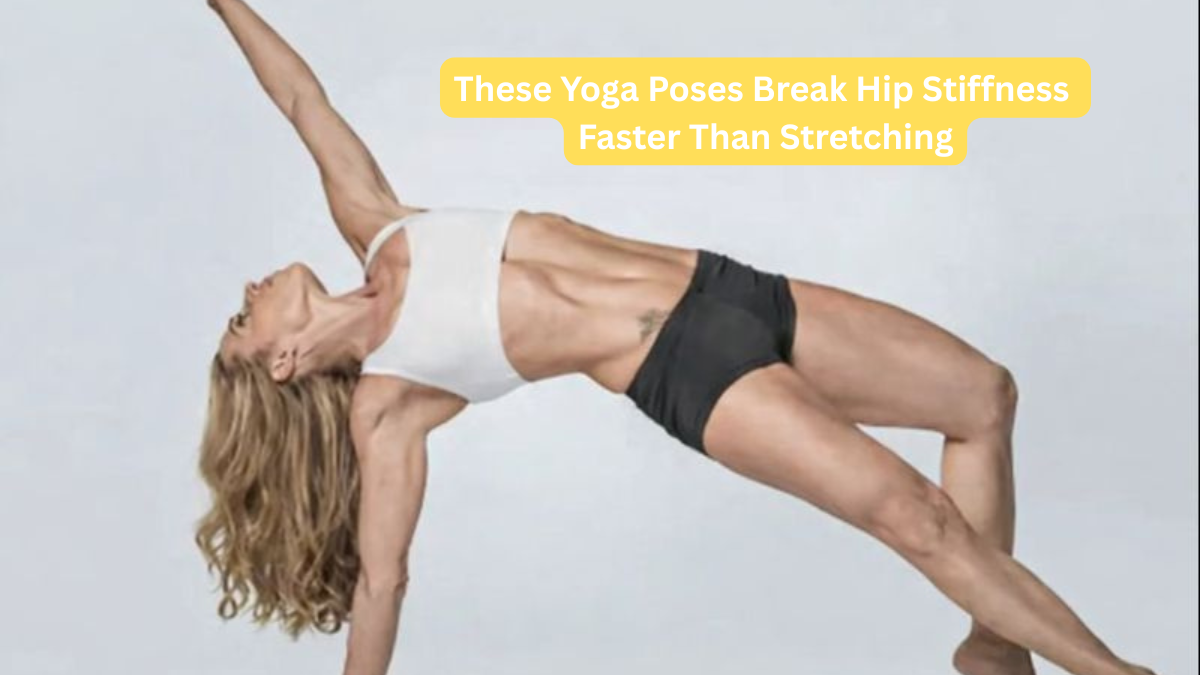
Hip stiffness is often treated with stretching, but many people are surprised when stretching alone doesn’t bring lasting relief. In fact, aggressive or rushed stretching can sometimes make hips feel tighter. The reason is simple: stiffness isn’t only a muscle issue—it’s also a nervous system response. Yoga works faster than traditional stretching because it calms the body first, allowing the hips to release naturally instead of resisting. These yoga poses focus on relaxation, breath, and joint-friendly movement, helping hip stiffness break down more quickly and comfortably.
Contents
- 1 Why Stretching Often Fails for Tight Hips
- 2 How Yoga Releases Hips Faster
- 3 Standing Forward Fold for Immediate Softening
- 4 Low Lunge to Undo Sitting Tightness
- 5 Butterfly Pose for Inner Hip Freedom
- 6 Seated Figure Four for Outer Hips
- 7 Cat–Cow to Rehydrate Joints
- 8 Child’s Pose With Wide Knees for Deep Relaxation
- 9 Supine Knee-to-Chest for Decompression
- 10 Supine Spinal Twist to Restore Rotation
- 11 Breathing Makes the Difference
- 12 How Long to Practice for Fast Results
- 13 Common Mistakes That Slow Progress
- 14 How You’ll Feel When It Works
- 15 Conclusion
- 16 FAQ
Why Stretching Often Fails for Tight Hips
When hips feel stiff, the body is usually protecting the joint. Long sitting, repetitive movement, stress, or fatigue can trigger this protective tension. Stretching tries to force length into tight muscles, which the body may resist. Yoga takes a different approach by slowing the breath and easing the nervous system, telling the hips it’s safe to let go.
How Yoga Releases Hips Faster
Yoga combines gentle movement with deep breathing and mindful stillness. This improves circulation, increases joint lubrication, and reduces muscle guarding. When the nervous system relaxes, muscles soften more quickly, which is why many people feel relief within minutes rather than weeks.
Standing Forward Fold for Immediate Softening
A relaxed forward fold allows the hips and lower back to release without effort. Bending the knees slightly prevents strain and encourages the pelvis to relax. This pose often brings quick relief after long sitting or standing.
Low Lunge to Undo Sitting Tightness
Low lunge opens the front of the hips, especially the hip flexors that tighten from sitting. Moving slowly into the pose and breathing deeply helps release tension faster than static stretching.
Butterfly Pose for Inner Hip Freedom
Sitting with the soles of the feet together gently opens the inner hips and groin. Supporting the knees with cushions allows gravity to work without forcing depth, which leads to faster release.
Seated Figure Four for Outer Hips
Outer hip and glute tightness often limits mobility. This pose targets those areas directly and can quickly reduce the “locked” feeling around the hips and lower back.
Cat–Cow to Rehydrate Joints
Gentle spinal movement increases blood flow and joint lubrication around the pelvis. This rhythmic motion helps stiffness melt away faster than holding static stretches.
Child’s Pose With Wide Knees for Deep Relaxation
A wide-knee child’s pose lets the hips open softly while the body fully relaxes. This pose is especially effective when stiffness is tied to stress or fatigue.
Supine Knee-to-Chest for Decompression
Lying on the back and hugging the knees releases pressure from the hips and lower spine. Because the body is fully supported, the hips can relax instantly.
Supine Spinal Twist to Restore Rotation
Twists gently bring back natural rotation in the hips and spine, which is often lost with repetitive movement. This improves mobility without strain.
Breathing Makes the Difference
Slow nasal breathing speeds up release. Try inhaling for four counts and exhaling for six. Longer exhales signal the nervous system to relax, allowing hips to soften faster than stretching alone.
How Long to Practice for Fast Results
Even 5–10 minutes of these poses can bring noticeable relief. Short, frequent sessions work better than long, forced stretches done occasionally.
Common Mistakes That Slow Progress
Forcing depth, holding the breath, or pushing through pain keeps the hips tight. Yoga works best when comfort leads the way.
How You’ll Feel When It Works
Hips feel lighter, walking becomes smoother, posture improves, and the lower back feels less strained. Many people also notice better sleep and less restlessness.
Conclusion
If stretching hasn’t helped your hip stiffness, yoga may be the missing piece. These poses break hip stiffness faster because they work with your body instead of against it. By calming the nervous system and gently restoring movement, yoga helps the hips release naturally—often in minutes, not weeks.
FAQ
Is yoga really better than stretching for hip stiffness?
Yes, because it relaxes the nervous system first, allowing faster release.
How soon will I feel relief?
Many people feel improvement within minutes of gentle practice.
Can beginners do these poses?
Absolutely. All poses are beginner-friendly and easy to modify.
Do I need to practice daily?
Short daily sessions work best for long-term relief.
Should these poses feel intense?
No. Mild sensation is enough—avoid pain.
Can yoga help hip stiffness from sitting or running?
Yes, it’s effective for both sedentary and active lifestyles.