
Improving flexibility doesn’t require extreme stretching, painful poses, or years of practice. In fact, flexibility improves best when the body feels safe, relaxed, and consistent in movement. Yoga is one of the most natural ways for beginners to become more flexible because it combines gentle stretching with breathing and body awareness. These twelve beginner-friendly yoga poses are designed to gradually loosen tight muscles, improve joint mobility, and help your body move more freely—without forcing or strain.
Contents
- 1 Why Yoga Is Ideal for Beginners Who Want More Flexibility
- 2 Mountain Pose for Postural Flexibility
- 3 Standing Forward Fold for Hamstrings and Back
- 4 Low Lunge for Hip Flexors
- 5 Cat–Cow Stretch for Spine Mobility
- 6 Downward Facing Dog (Gentle Version)
- 7 Seated Forward Fold for Relaxed Stretching
- 8 Butterfly Pose for Inner Hips
- 9 Seated Twist for Side Body Flexibility
- 10 Child’s Pose for Gentle Release
- 11 Supine Knee-to-Chest Pose for Lower Back and Hips
- 12 Supine Figure Four for Outer Hips
- 13 Reclined Bound Angle Pose for Deep Relaxation
- 14 How Often Beginners Should Practice for Flexibility
- 15 Common Beginner Mistakes to Avoid
- 16 How Natural Flexibility Improves Daily Life
- 17 Conclusion
- 18 FAQ
Why Yoga Is Ideal for Beginners Who Want More Flexibility
Many beginners believe they need to be flexible before starting yoga, but flexibility is actually the result of practice, not a requirement. Yoga improves flexibility by calming the nervous system first. When stress levels drop, muscles stop guarding and naturally lengthen. Gentle, repeated movement also increases circulation and joint lubrication, which is essential for long-term flexibility.
Mountain Pose for Postural Flexibility
Mountain pose teaches alignment and awareness. Standing tall with relaxed shoulders helps lengthen the spine and reduce postural stiffness. While subtle, this pose lays the foundation for flexibility by improving how the body holds itself throughout the day.
Standing Forward Fold for Hamstrings and Back
This gentle fold stretches the hamstrings, calves, and spine. Beginners can bend the knees slightly to avoid strain. Letting the head hang helps release tension from the neck and upper back, encouraging overall flexibility.
Low Lunge for Hip Flexors
Low lunge is excellent for beginners with tight hips from sitting. It gently opens the front of the hips while strengthening the legs. Improved hip flexibility often leads to better posture and less lower-back discomfort.
Cat–Cow Stretch for Spine Mobility
This slow, flowing movement improves flexibility along the entire spine. Coordinating breath with movement helps release stiffness in the neck, shoulders, and lower back while warming up the body safely.
Downward Facing Dog (Gentle Version)
Downward dog stretches the back, shoulders, hips, calves, and hamstrings all at once. Beginners can keep knees bent and focus on lengthening the spine rather than straightening the legs.
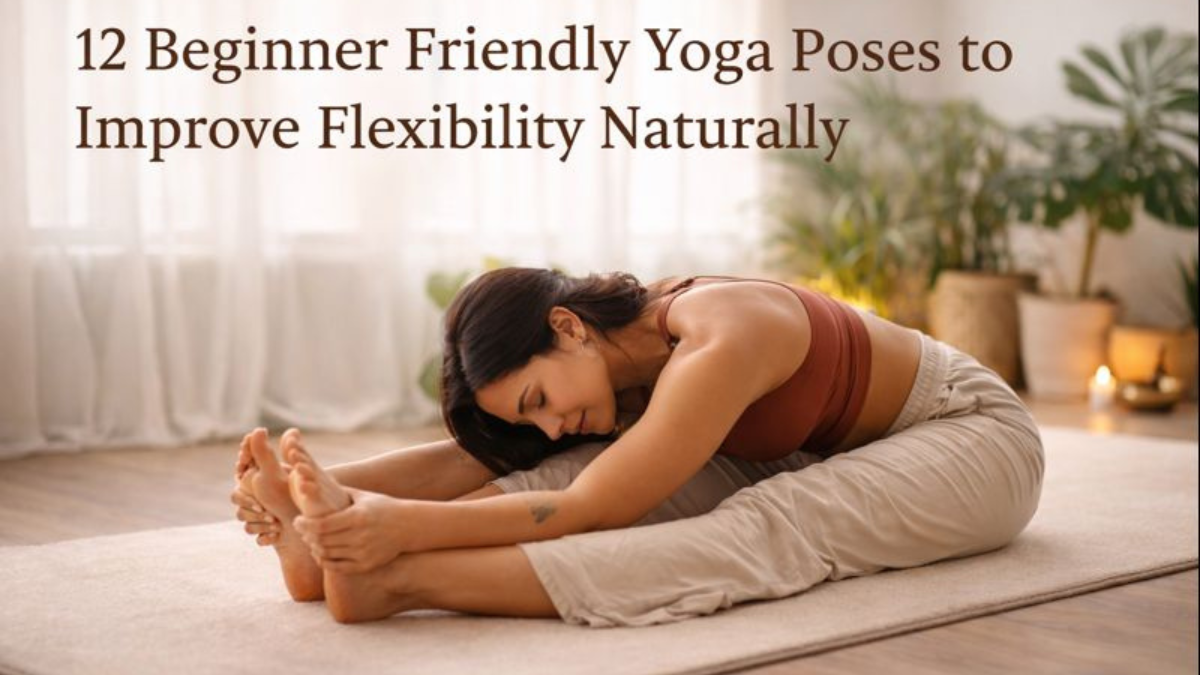
Seated Forward Fold for Relaxed Stretching
This pose stretches the hips, hamstrings, and lower back without weight-bearing pressure. It encourages relaxation, which allows muscles to soften and lengthen naturally over time.
Butterfly Pose for Inner Hips
Butterfly pose gently opens the inner thighs and groin. This area is often tight in beginners, and gentle holds with relaxed breathing improve flexibility without discomfort.
Seated Twist for Side Body Flexibility
Twists improve flexibility around the spine, waist, and hips. Gentle seated twists restore natural rotation and help release stiffness built up from daily posture habits.
Child’s Pose for Gentle Release
Child’s pose stretches the hips, back, and shoulders while allowing full relaxation. It’s especially helpful for beginners because it combines flexibility with rest.
Supine Knee-to-Chest Pose for Lower Back and Hips
This lying-down pose gently stretches the hips and lower back while decompressing the spine. It’s excellent for beginners who feel stiff after long days of sitting.
Supine Figure Four for Outer Hips
This beginner-friendly hip opener releases tension in the glutes and outer hips without stressing the joints. Improved hip flexibility often leads to easier movement overall.
Reclined Bound Angle Pose for Deep Relaxation
This restorative pose allows gravity to gently open the hips while the body is fully supported. Longer holds encourage deep flexibility gains without effort.
How Often Beginners Should Practice for Flexibility
Consistency matters more than intensity. Practicing these poses for 10–20 minutes, 4–6 days a week, leads to noticeable flexibility improvements within a few weeks. Gentle daily practice works best.
Common Beginner Mistakes to Avoid
Forcing stretches, holding the breath, or comparing flexibility to others can slow progress. Flexibility improves fastest when movements are slow, comfortable, and paired with steady breathing.
How Natural Flexibility Improves Daily Life
As flexibility increases, everyday movements like walking, bending, reaching, and sleeping feel easier. Reduced stiffness also improves posture, reduces aches, and boosts overall energy.
Conclusion
You don’t need to push your body to become flexible—you need patience, breath, and consistency. These twelve beginner-friendly yoga poses offer a safe and natural way to improve flexibility while also calming the mind and supporting joint health. With regular practice, your body will gradually open, lengthen, and move with greater ease and comfort.
FAQ
How long does it take to improve flexibility with yoga?
Many beginners notice changes within 2–4 weeks of consistent practice.
Is yoga safe for very stiff beginners?
Yes, gentle yoga is ideal for stiff bodies when done without forcing.
Should beginners stretch every day?
Gentle daily stretching is safe and often most effective.
Do I need to hold poses for a long time?
No, even 30–60 seconds per pose is beneficial for beginners.
Will yoga make me overly flexible?
No, yoga improves balanced flexibility and joint stability.